





The Super Bowl and Bad Bunny's halftime show
 Activer le mode zen
The Super Bowl is the annual championship game of the National Football League (NFL). It was first held in 1967, following a merger agreement between the NFL and the American Football League (AFL), so that their best teams could compete in a championship.
The Super Bowl is one of the most-watched sporting events in the world and often draws the largest television audience in the United States each year. As the popularity of the championship increased, the halftime show became more prominent and is now headlined by high-profile artists. The economic impact of the event is tremendous: it features extremely expensive commercials and is one of the biggest food consumption days in the United States, second only to Thanksgiving.
The history of the Super Bowl
- "The Entire History of the Super Bowl" (Video, NFL Throwback, 25'54, 2020).
- "A rookie’s guide to Super Bowl lingo" (Article, BBC, 2026). How many players are there in an American football team? What's a touchdown? What on earth is a fumble? This article defines the most important terms and rules of American football.
- "By a wide margin, Americans say football – not baseball – is ‘America’s sport’" (Article, Pew Research Center, 2024). In 2023, Pew Research Center asked 12,000 adults the following question: “If you had to choose one sport as being ‘America’s sport,’ even if you don’t personally follow it, which sport would it be?”.
- "Why Football Matters" (Podcast, The New Yorker, 2026, 47'05). Why is American football still so popular, in spite of the health risks for its players?
- "From A to Z, here’s everything you need to know about the history of the Super Bowl" (Article, CNN Sports, 2026). This article offers a guide to the history and traditions of the Super Bowl.
The economic impact of the Super Bowl
- "How The Super Bowl Became A Revenue Generator For The NFL" (Video, CNBC, 2026). Every year, the NFL makes millions from the event.
- "The Economics of the Super Bowl, By the Numbers" (Article, Time Magazine, 2026). This article gives an overview of the ways the Super Bowl "supercharges" the economy, from tourism to betting.
- "The Super Bowl’s Economic Impact: Big Game, Big Money, Big Costs" (Article, College of Natural Resources News, 2026). NC State professor Mike Edwards breaks down the economic and social impact of the Super Bowl on host cities and the NFL.
- "Do Super Bowl Ads Really Work?" (Article, Stanford Business, 2015). This article looks at the benefits to running an ad during the Super Bowl, as not all TV commercials drive enough sales to offset the ad’s cost.
- "What Super Bowl Commercials Teach Us About Capitalism" (Article, Time Magazine, 2026). While many people tune in to watch the game, a fair amount watch the Super Bowl for the ads.
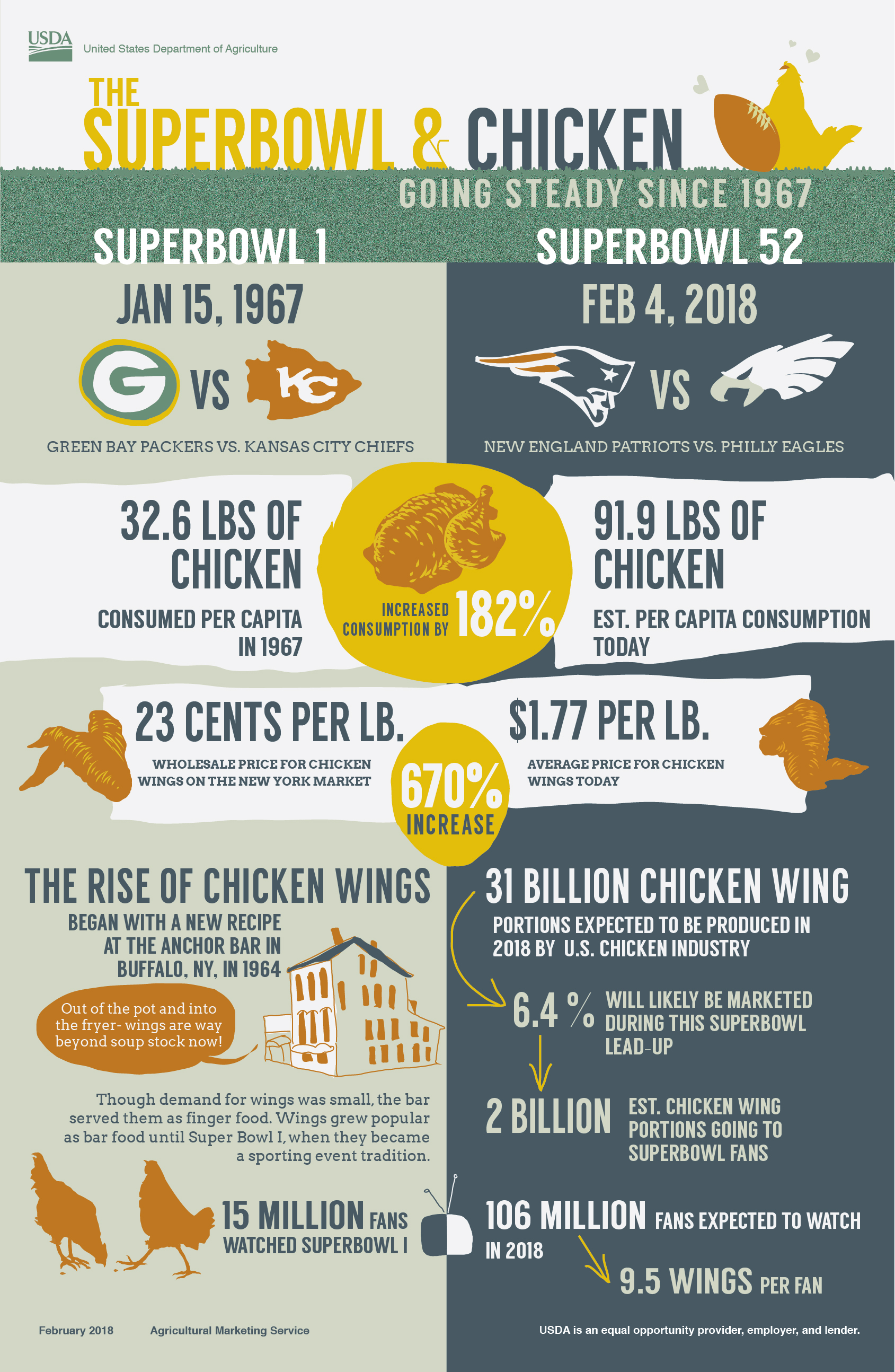
- "Americans to Eat 1.48 Billion Chicken Wings for Super Bowl LX" (Article, National Chicken Council, 2026). Super Bowl day sees an increase in fast food orders.
The Super Bowl halftime show
A cultural and political event
- "Every Super Bowl Halftime Headliner From The Last Decade" (Article, Forbes, 2026). The article identifies a shift in the halftime show purposes in 1991, with New Kids on the Block's performance. If the show had served as a civic platform, it then became more concerned with pop culture in the early 1990s.
- "The Super Bowl is a cultural moment—but why?" (Article, Case Western Reserve University, 2023). In this interview, Professor John Grabowski outlines four factors he believes contributed to the rise of the Super Bowl.
- "The Start of Something Big" (Article, SportsNet). This article traces the first football halftime show back to 1922, when a (racist) dog show was designed to advertise and sell products.
- "The cultural stakes of the Super Bowl halftime show, from Madonna to Bad Bunny" (Article, Newsroom UCLA, 2026). Scholar Joanna Love offers insight into the absence of female performers between 2004 and 2012, following Justin Timberlake and Janet Jackson's performance.
- "Super Bowl 2026: Cultural takeaways and what it says about the USA today" (Article, France 24, 2026). This article presents the main takeaways from this year's Super Bowl, from Bad Bunny's performance to the use of AI in ads.
Bad Bunny's 2026 Halftime performance
- "All of the Hidden Symbols and Meanings You May Have Missed in Bad Bunny’s Super Bowl Set" (Article, Rolling Stone, 2026). The article explains all of the details of the halftime show, from the colors used on set to the proud display of flags.
- "Bad Bunny’s All-American Super Bowl Halftime Show" (Article, The New Yorker, 2026). Kelefa Sanneh considers Bad Bunny's music as both inclusive and exclusive and reflects on the mixed message his halftime show performance delivered.
- "Insight into how the headliner for the Super Bowl halftime show is chosen" (Podcast, NPR, 3 minutes, 2026). Who makes the decision about who will perform, and how do they decide?
- "What Americans think about the Super Bowl and Bad Bunny" (Survey, YouGov, 2026). How do Americans plan to watch the Super Bowl?
- "Key facts about U.S. Latinos" (Resources, Pew Research Center, 2025). Latinos are among the fastest-growing racial or ethnic groups in the United States; Pew Research Center publishes some key facts about today’s U.S. Latino population.
The All-American Halftime Show
Announced as an alternative to the Super Bowl LX halftime show headlined by Puerto Rican artist Bad Bunny, the All-American Halftime Show was produced by Turning Point USA, a nonprofit organization founded by Charlie Kirk that advocates for conservative politics. It was broadcast at the same time as the official halftime show.
- "MAGA Halftime Show Ratings ‘Shot Across the Bow’ for Super Bowl—TPUSA" (Article, Newsweek, 2026). The YouTube Stream for TPUSA’s 25-minute “All-American Halftime Show drew about 19 million viewers by 6 a.m.
- "Kid Rock’s ‘All-American Halftime Show’ Goes Light on Politics, Feeling More Like an Old CMT Special Than Super Bowl Protest Event" (Article, Variety, 2026). Although it was announced as an event celebrating "American culture, freedom, and faith", the performances were largely non-political.
- "Turning Point USA's Super Bowl halftime show pays tribute to Charlie Kirk" (Article, Fox News, 2026). The show paid tribute to the founder of Turning Point USA Charlie Kirk.
Further resources
On the Super Bowl:
- Clé des langues: "9 de febrero de 2026 - Increíble actuación de Bad Bunny en el Super Bowl 2026".
On Puerto Rico:
- Clé des langues: "West Side Story then and now: the representation of Puerto Rican immigrants in the 1961 film and the 2021 remake". Based on Shakespeare’s Romeo and Juliet, West Side Story holds an important place within American culture: it started as a Broadway success, became an Oscar-winning movie in the early 1960s, and then was readapted to the big screen sixty years later by Steven Spielberg. This article analyzes how key issues such as immigration and territory are particularly addressed in each film, as well as how the racial and gender portrayal of Puerto Ricans living in mid-20th century New York City has evolved from one version to another.
- Clé des langues: "The Young Lords". The Young Lords were the children of the first large wave of Puerto Rican migration to the North East of the United States, in cities like New York, Chicago, Philadelphia and Hartford.
- Géoconfluences: "Image à la une. San Juan (Porto Rico), maritimisation et mise en tourisme". San Juan, the macrocephalic capital of Puerto Rico, an unincorporated territory of the United States located in the Caribbean arc, is marked by the maritime nature of its activities. A regional port hub that handles a significant portion of Caribbean maritime traffic, it is also a major cruise port, with consequences for the city's development.
- Géoconfluences: "Porto Rico, un État en faillite, article et carte dans « Le Monde »". Le Monde has published a richly illustrated article on the island of Puerto Rico, an unincorporated territory of the United States, along with a comprehensive map.
Pour citer cette ressource :
Marion Coste, The Super Bowl and Bad Bunny's halftime show, La Clé des Langues [en ligne], Lyon, ENS de LYON/DGESCO (ISSN 2107-7029), février 2026. Consulté le 26/02/2026. URL: https://cle.ens-lyon.fr/anglais/civilisation/domaine-americain/the-super-bowl-and-bad-bunnys-halftime-show

.jpg)